You’ve probably put real thought into what’s on your plate. Organic produce. Quality proteins. Healthy fats. Simple, clean ingredients.
But have you ever thought about what your food is cooking on?
It’s one of the most overlooked parts of a healthy kitchen. Your cookware touches your food every single day, often at high temperatures, again and again. That makes it worth a closer look.
In this article, we’ll walk through what’s in conventional nonstick pans, why more people are switching to stainless steel, what you should know before you do, and what sets 360 Cookware apart.
What’s Actually in Your Nonstick Pan?
Most nonstick pans are coated with PTFE (polytetrafluoroethylene), the main ingredient in Teflon. PTFE belongs to a large family of man-made chemicals called PFAS, which are often called “forever chemicals” because they break down so slowly in the environment.
Here’s where the concerns come from:
- Overheating. PTFE begins to break down at high temperatures (roughly 500°F and above), which can release fumes. Inhaling them can cause polymer fume fever, a temporary flu-like illness sometimes called “Teflon flu.”
- Scratches and wear. Nonstick coatings scratch easily, and research suggests damaged pans can release micro- and nanoplastic particles into food.
- Legacy chemicals. PFOA, a PFAS once used to make PTFE, was phased out of U.S. cookware between 2006 and 2015 following health concerns.
- Persistence. PFAS don’t simply disappear. They can linger in the environment long after a pan is thrown away.
A pan left on high heat. A scratch from a metal utensil. An older pan that has seen better days can all leach these chemicals into your food.
The Health Case for Switching to Stainless Steel
Stainless steel takes a different approach. Instead of relying on a synthetic coating, you’re cooking on solid, durable metal.
Here’s what that can mean for your kitchen:
- No chemical nonstick coating. There’s no PTFE layer to overheat, scratch, or flake into your food.
- Built for high heat. Stainless steel is made for searing and oven use, so you’re not limited by a coating’s temperature ceiling.
- Stable and corrosion-resistant. Quality stainless steel holds up to everyday cooking, washing, and utensils.
- Made to last. A pan with no coating to wear out doesn’t need to be replaced every few years, which means less waste and fewer new products you need to purchase.
This is a small change in the kitchen that will minimize the amount of chemicals that come in contact with your food, which creates a lasting impact.
What Makes 360 Cookware Different?
Not all stainless steel cookware is built the same way. Here’s what sets 360 Cookware apart:
✔ Zero chemical nonstick coatings. 360 Cookware is made without PFAS, PFOA, PFOS, or PTFE.
✔ Your food touches stainless steel, not aluminum. The cooking surface is T-316 stainless steel (18/10), while an aluminum core for even heating is encased inside the stainless layers.
✔ Vapor® Cooking technology. 360’s lids are designed to form a vapor seal that uses the natural moisture in your food, so you can cook with less added water and fat.
✔ Even heating. Durable multi-ply construction is designed to spread heat evenly and avoid hot spots.
✔ Oven safe to 500°F and induction compatible.
✔ Handcrafted in West Bend, Wisconsin. 360 Cookware is a family-run American company, and each piece is built to last for years.
Many stainless steel pans are simply a metal cooking surface. 360 Cookware is designed more like a complete cooking system. The lid forms a tight seal, so moisture stays in the pan and circulates back over your food, creating a continuous basting effect much like a Dutch oven. Combined with the even-heating, multi-ply construction, that’s what lets you cook with less added water and oil, and at gentler temperatures. According to 360, it also helps lock in flavor and nutrients.
Meet the 360 Cookware 10″ Fry Pan
If you’re only going to start with one piece, the 10″ fry pan is a practical place to begin. It’s sized for everyday meals without feeling oversized, and it’s versatile enough to use morning, noon, and night:
- Eggs, omelets, and breakfast potatoes
- Searing chicken, fish, and other proteins
- Sautéing fresh vegetables
- Cooking ground turkey or beef
- One-pan lunches and weeknight dinners
Even heating also makes it easier to cook at moderate temperatures, which means less scorching, less guesswork, and fewer burnt spots to scrape off at the end.
How to Cook on Stainless Steel (Without Everything Sticking)
Here’s the tip no one tells you: stainless steel doesn’t have to mean everything sticks. It just works a little differently than nonstick.
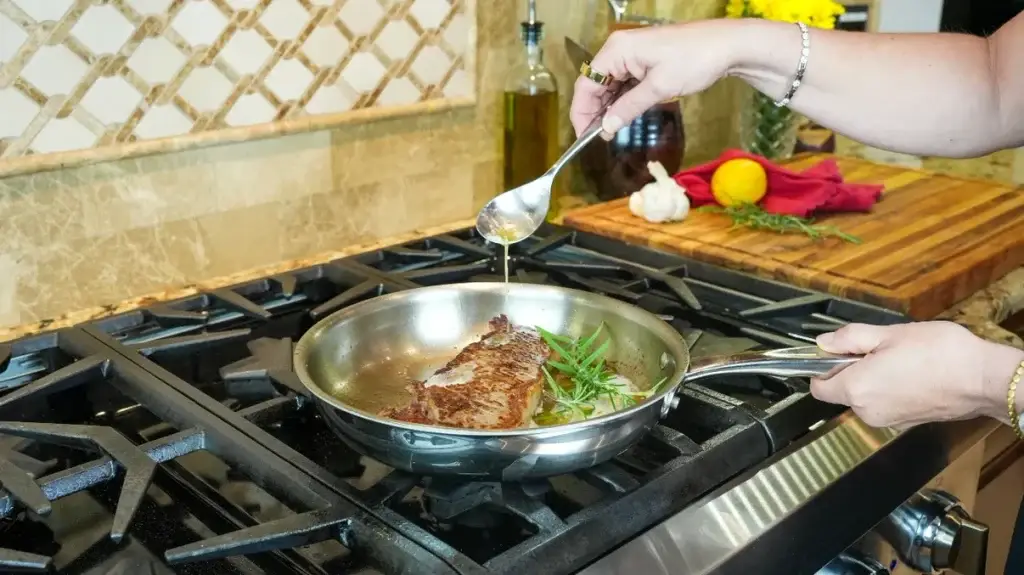
- Preheat the pan first. A properly heated pan helps food release.
- Add your oil once the pan is hot. Use an appropriate amount of a healthy cooking oil.
- Cook at medium heat. Moderate temperatures prevent unnecessary burning.
- Be patient. Let your food develop a natural sear before you flip or move it. When it’s ready, it will release on its own.
A little practice, and it becomes second nature.
Swap Your Cookware Out For Something Better
At Elevate, we believe supporting your health goes beyond the food on your plate. It’s also about the everyday products you bring into your home.
You don’t need to replace your entire kitchen overnight. Start with the pan you reach for most often.
If you’re ready to make the swap, you can explore 360 Cookware and its wide variety of products here.